
Protected characteristics
At Edward Pauling, we teach children that we all have characteristics and that 9 are protected.
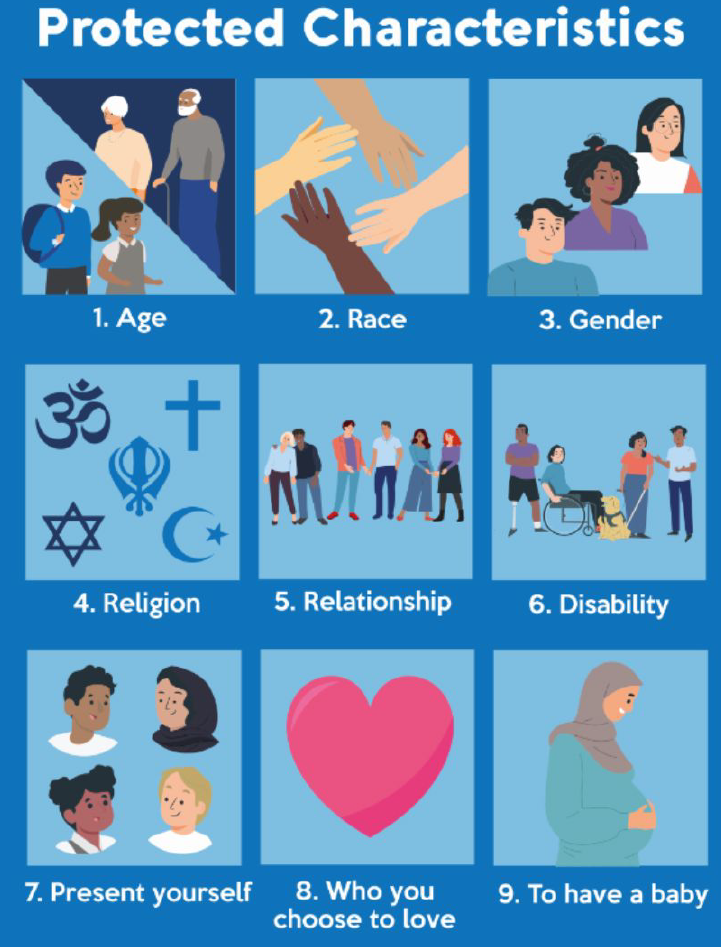
The Equality Act became law in 2010. It covers everyone in Britain and protects people from discrimination, harassment and victimisation because of the protected characteristics that we all have.
Under the Equality Act, these are nine protected characteristics:
- Age
- Disability
- Gender reassignment
- Race - including colour, nationality, ethnic or national origin
- Religion or belief
- Marriage or civil partnership
- Sex
- Sexual orientation
- Pregnancy and maternity
No form of discrimination is tolerated at Edward Pauling Primary School, and we respect for those who share the protected characteristics.
We do not teach about all the protected characteristics in every year group. The PSHE curriculum is planned and delivered so that our pupils develop age appropriate knowledge and understanding during their time at Edward Pauling Primary School.
The 9 Protected Characteristics are actively promoted in school through:
•Our school vision and our school improvement work
•Our school core values
•Our school relationship policy
•Conscious role modelling by all adults in the school community
•Active engagement and communication with parents and carers
•Assemblies
•Class lead 'Safe and Sound' assemblies
•Modelling and teaching appropriate vocabulary
•Personal, Social, Health and Economic education (PSHE) sessions
•Religious Education (RE) lessons, RSE lessons,
•Pupil Voice opportunities
•Educational visits
•School council
•Extra-curricular activities, theme events, after-school clubs, charity work and work within the local community
We firmly believe that embedding Protected Characteristics into the whole school ethos at Edward Pauling promotes:
- Self-esteem, self-knowledge and self-confidence of everyone in our school community
- Respect for democracy and support for participation in the democratic process will be raised
- Acceptance of responsibility for their own behaviour
- Respect for their own and other cultures
- Understanding of how people can contribute positively to school and home life and to the lives of those living and working in the local community and beyond
- An understanding of Equality, Human Rights and Protected Characteristics
- An understanding of how citizens can influence decision-making through the democratic process
- An appreciation that living under the rule of law protects individual citizens and is essential for their wellbeing and safety of all
- An understanding that the freedom to choose and hold other faiths and beliefs is protected in law
- An acceptance that other people having different faiths or beliefs should be accepted and tolerated, and should not be the cause of prejudicial or discriminatory behaviour
- An understanding of the importance of identifying and combating discrimination